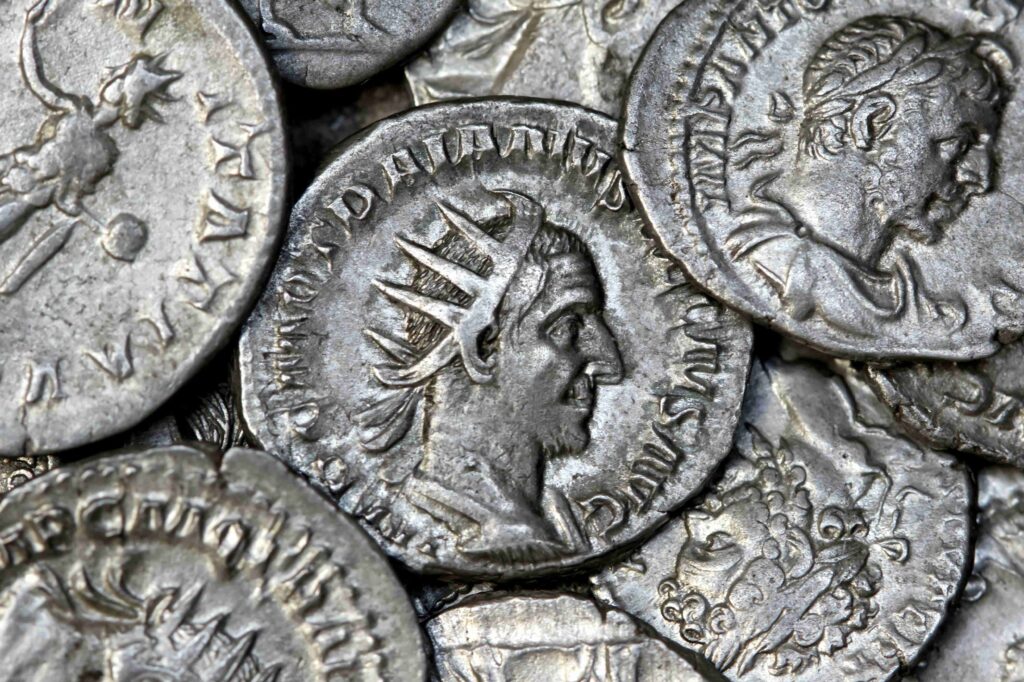
By the 3rd century AD, Rome was the undisputed superpower of the world. An empire stretching from the Atlantic coast in the west to the Persian Gulf in the east, from the British grasslands to the sandy deserts of Egypt. For centuries, Rome stood unmatched in power and influence. The empire went through a chaotic time period from 235 AD to around 284 AD. A period which was to be named by future historians as the crisis of the 3rd century.
Back then, Rome had a little spending problem that was dangerously spiraling out of control. To understand the background, we need to take a brief history lesson.
Why Rome Was Spending Like a Drunk Senator
Long before Rome started minting worthless coins (We are getting ahead of ourselves), the empire held on to large piles of wealth from taxation and from new conquests. This is how the empire started burning through that cash like a lottery winner on steroids.
- Military Spending: Let’s start with the army. Under Augustus Caesar (Rome’s first emperor) Rome had around 250,000 military personnel in total. Fast forward to the late 200s AD, Emperor Diocletian had 600,000! During this time period wages rose from 225 silver denarii a year to 750 denarii a year.
- The Tetrarchy and the Bureaucracy: Around 293 AD, the Romans apparently decided that having a single emperor wasn’t expensive enough. They formed the Roman Tetrarchy with 4 co-emperors, four capitals, four armies, and of course, four bureaucracies. That’s not all. The 20-odd provinces were divided into a 100, each with their own administrative layers.
- Poor Taxation: Rome had decentralized the tax collection, which as handed over to locals known as “decurions”. Here is the kicker, they didn’t just collect the taxes; they were personally liable to pay from their own pockets. Who did you have to tick off to get that job?
- Troubled Frontiers: Remember the large army Rome maintained? It came in handy in defending the empire from wave after wave of invasions from Germanic tribes in the north and from the Sassanids to the east. Defending the frontier was a full-time job- a costly one too.
All this put a heavy strain on the empire’s coffers. So, how did they try to solve it? You guessed it. By minting more money. Because, yes, even back then, governments tried to solve their money problems by making more money. Rome was following Modern Monetary Theory before it was cool.
Here is how it all happened.
The Debasement of the Denarii
When the Roman currency, the silver denarius, was introduced in the early 200s BC, it was a pure silver coin that weighed about 4 grams. For centuries, it worked as the main currency of the Romans. It all started with Emperor Nero. Yes, that Nero.
- Earliest major debasement under Nero in 64 AD – Reduced silver content of the denarius from 97% to 93%, allowing him to mint more coins with less silver.
- Gradual declines throughout the 2nd century AD – By the time Marcus Aurelius ruled, it was at 75% and under Severus Alexander it was down to 50%
- Crisis of the Third Century – During this turbulent time, the content of a denarius was down to 5% or lower.
- Aurelian Reforms (274 AD) – Emperor Aurelian introduced a “new and improved” silver coin (called the antoninianus) but, the public did not trust the government anymore. They simply didn’t believe that the coin had any silver in it and treated it as monopoly money.
- Diocletian’s Price Freeze (301 AD) – Emperor Diocletian’s plan to put a stop to rising prices was brilliant. He passed a law known as the Edict on Maximum Price. Hoping it would stop inflation. But it didn’t. Not even a little.
- The Rise of the Barter System (Late 3rd and 4th century AD) – Eventually, coins became so worthless that the Romans gave up on them completely and went back to the barter system. A cashless society- but not in a good way.
- Taxation in Goods – Since the coins were mostly worthless, the government began accepting taxes in the form of wheat, livestock, and other commodities.
Government expenditure grew. Minted more money. Confidence in the currency eroded. Prices keep rising. Trade slowed. Sound familiar? The Roman government did everything wrong. Refused to cut down spending, and kept printing worthless money. Tried to enforce price controls.
It didn’t work. Shocker. And you know the aftermath. The empire became too expensive to operate and too rigid to adapt. The Roman Empire would eventually crumble in 476 AD, unable to fend off the barbarians.
It’s easy for us to look down and scorn at the Romans’ errors in hindsight from the 21st century. But keep in mind that back then, economics was not yet a thing. The Romans did not have access to data reports, advanced economic models, or supercomputers to run simulations. We do. What is our excuse? Why do we keep repeating the same mistakes? Even though we have developed a digital economy, the playbook hasn’t changed much. Under the Modern Monetary Theory, central banks around the world turned into printing presses during the pandemic, pumping billions of worthless cash into the economy. Let’s learn from the Roman Empire’s mistakes – because history can repeat itself.